








Specialty Citrus
Merchandising Citrus
Ordering Citrus
Receiving Citrus
Handling Citrus


MERCHANDISING

Displays
The basics: Specialty citrus offers good color to the produce department. Promote them through large displays and advertising.
Because of its easy-peeling qualities, specialty citrus can be promoted as a snack. It also can be used for juicing.
Keep display depths shallow to avoid damaging rows on the bottom with pressure from those on top.
If carrying more than one type of specialty citrus, provide information on characteristics of each.
Play-up specialty citrus during the holidays. The citrus varieties are popular ingredients in fruit salads, compotes and ambrosias. During the holidays, fruit with stems and leaves is particularly attractive and available in most major varieties.

Nutrition
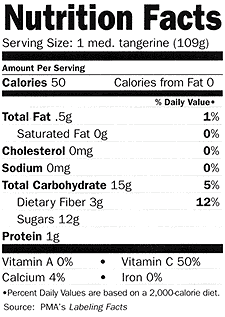
In addition to providing grams and Daily Values, nutrient content descriptors can inform consumers if a nutrient level is considered high or low.
When using a nutrient content descriptor, Food and Drug Administration labeling laws state that the descriptor should be used as in this example: broccoli, a low-sodium food, or broccoli, low in sodium, etc. The statement low-sodium broccoli implies that the broccoli is different or specially prepared. Do not use that type of misleading statement.
Nutrient content descriptors allowed for tangerines include: non-fat, saturated-fat-free, very low


Sodium, cholesterol-free, a good source of fiber(must state that tangerines contain 12% dietary fiber per 140g tangerine), and high in vitamin C.

Foodservice
Tangerines add flavor to salads, stir-frys and baked dishes. Tangerine flowers add color as a garnish to any dish. Citrus juice makes a good, tenderizing marinade for meat.
The outer colored peel of citrus has tiny oil sacs that are full of flavor. The peel can be grated and used in lieu of synthetic citrus flavorings. The white portion of a citrus peel contains pectin, the substance that causes jellies and jams to jell.


Varieties/types
Tangelos
(Cross between a tangerine and a grapefruit)

Minneola
(Honeybell)
Tart-sweet flavor
Dec-mid-Apr

Orlando
Mildly sweet flavor
Nov-Jan

Tangerines
Dancy
Sweet flavor
Nov-Jan

Algerian
Spicy, tart-sweet flavor
Nov-Jan

Fairchild
Seeded
Rich, sweet flavor
Mid-Oct to Jan

Honey
(Murcott)
Rich, sweet flavor
Feb-Mar

Mandarins
Royal Mandarin
Tart-sweet
Jan-Feb

Honey
(Different from Fla.’s Honey tangerine)
Rich flavor
Jan-Apr

Tangors
(Cross between a tangerine and an orange)

Temple
Rich flavor
Jan-Mar
Satsuma
Mildly sweet flavor
Mid-Oct to Dec

Clementine
Sweet flavor
Nov-Mar

Other mandarins: Kara, Rangpur lime; Other tangelos: Nova, Early K, Sampson
Other tangerines: Robinson, Sunburst

Back to top

Specialty Citrus
Site Credits